
Rinoplasti
Rhinoplasty, or nose aesthetic surgery, is one of the main focus areas of Dr. Mustafa Çakır, Otolaryngologist (ENT Specialist). Rinoplasti is performed to reshape the nose so that it looks more harmonious with the face while at the same time protecting or improving nasal breathing. For every patient, Dr. Çakır designs an individual plan based on facial proportions, skin type, nasal structure and personal expectations, aiming for a natural, balanced result rather than an “over-operated” look.
Rinoplasti
Doctor Mustafa Clinic
Rinoplasti
Rhinoplasty, or nose aesthetic surgery, is one of the main focus areas of Dr. Mustafa Çakır, Otolaryngologist (ENT Specialist). Rinoplasti is performed to reshape the nose so that it looks more harmonious with the face while at the same time protecting or improving nasal breathing. For every patient, Dr. Çakır designs an individual plan based on facial proportions, skin type, nasal structure and personal expectations, aiming for a natural, balanced result rather than an “over-operated” look.

What is Rhinoplasty?
Rhinoplasty is a surgical procedure in which the bones and cartilage of the nose are reshaped. Through this operation the size of the nose can be reduced or refined, a dorsal hump can be smoothed, the nasal tip can be made more defined, and asymmetries that have developed over time or after trauma can be corrected. In many patients, aesthetic changes are combined with functional corrections, such as straightening a deviated septum or supporting narrowed nasal valves. The main goal is that, after surgery, the nose fits the rest of the face in a natural way and allows the patient to breathe comfortably.
Who is Rhinoplasty For?
Rhinoplasty may be suitable for people who are bothered by the appearance of their nose, feel that it does not match their facial features, or experience functional problems like chronic nasal blockage. Candidates are usually adults whose facial growth is complete and who are in generally good health. Just as important as the physical criteria are realistic expectations: rhinoplasty is not about creating a “perfect” face, but about achieving a noticeable, positive improvement. During the evaluation, Dr. Mustafa Çakır looks not only at the shape of the nose but also at the internal structures responsible for breathing, so that cosmetic and functional needs are considered together.
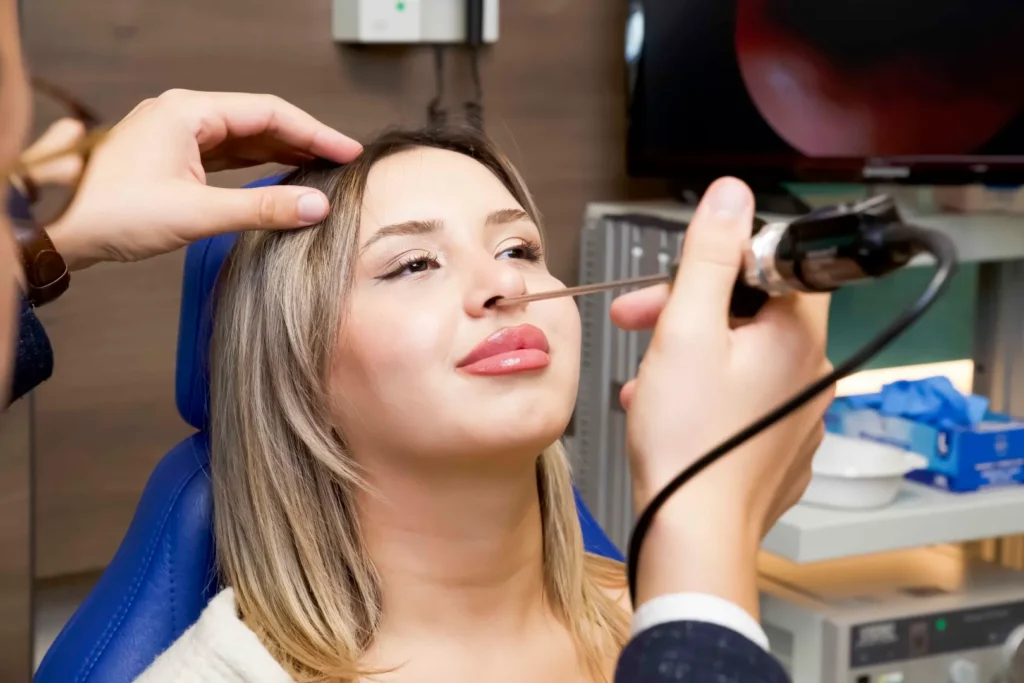
Consultation with Dr. Mustafa Çakır
The process begins with a detailed consultation. In this meeting, Dr. Çakır listens carefully to the patient’s complaints and wishes, and then performs a thorough ENT and nasal examination. The nasal septum, turbinates and airway are assessed, and when necessary endoscopic examination is used for a more detailed view. Photographs are taken from different angles and the nose is evaluated together with the chin, lips, forehead and overall facial shape. Dr. Çakır explains which changes are realistically achievable, which techniques may be needed, and what kind of result can be expected. This is also the moment to discuss anesthesia, hospital stay, recovery period and possible risks, so that the patient feels well informed before making a decision.
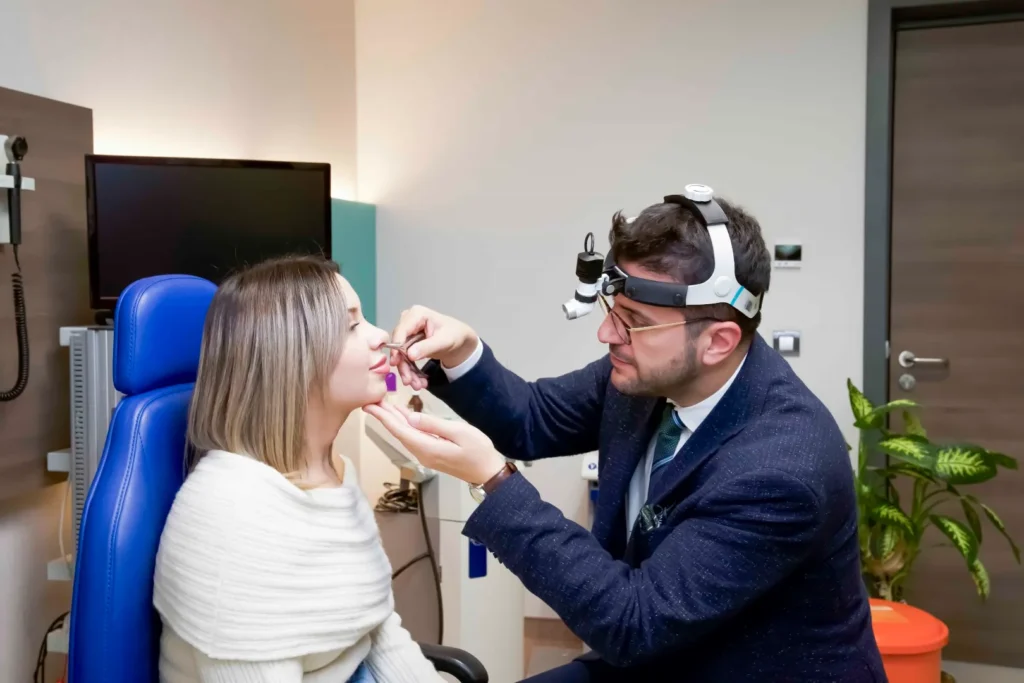
How Rhinoplasty is Performed
Rhinoplasty is performed under general anesthesia in a hospital setting. Depending on the individual case, Dr. Mustafa Çakır may choose a closed or open technique. In the closed approach, the incisions are hidden inside the nostrils; in the open approach, there is a small incision at the base of the columella, which allows full visibility of the nasal structures and is especially useful for complex, asymmetric or revision cases.
During the surgery, the nasal bones and cartilage are shaped, reduced, repositioned or strengthened to achieve the planned form. If required, cartilage grafts can be taken from the septum and, in more complex situations, from the ear or rib to support the tip, correct collapse or improve breathing. At the end of the procedure, a small external cast is placed on the nose and, where needed, soft internal splints are used to stabilize the septum and maintain the new structure.
Aesthetic and Functional Harmony
Because Dr. Mustafa Çakır is an ENT and rhinology specialist, he approaches every rhinoplasty from both an aesthetic and functional perspective. A nose that looks beautiful but does not allow the patient to breathe properly is not considered a successful result. For this reason, procedures such as septoplasty for deviated septum, turbinate reduction or nasal valve support are often combined with aesthetic corrections within the same operation. In this way many patients achieve a double benefit: a nose that fits their face and airflow that is significantly more comfortable in daily life, during sport and while sleeping.
Recovery and Healing
The first days after rhinoplasty are usually marked by swelling around the nose and under the eyes, and sometimes by mild bruising. Discomfort is generally well controlled with prescribed pain medication. Most patients spend one night in the hospital and go home the next day. In the first week, it is recommended to rest with the head elevated, avoid heavy lifting and protect the nose from trauma.
Around day seven to ten, the external cast and, if present, the internal splints are removed. At this stage, much of the bruising has faded and most people feel ready to return to work or school. In the following weeks, swelling gradually continues to decrease, and light exercise can be resumed according to the doctor’s advice. The nose keeps refining over several months; the final shape is usually seen between nine and twelve months after surgery. Throughout this period, Dr. Çakır and his team provide regular follow-up and are available to answer questions, including via online communication for international patients.
Risks and Safety
Like any surgical procedure, rhinoplasty carries some risks, such as bleeding, infection, prolonged swelling, asymmetry, changes in sensation around the nose or the possibility of needing revision surgery. Before the operation, Dr. Mustafa Çakır reviews the patient’s medical history in detail, checks current medications, and may request additional tests where necessary. He explains the potential risks in clear language and describes how they are minimized in practice. By choosing an experienced otolaryngologist with a focused interest in rhinology, patients reduce the likelihood of complications and increase the chance of a stable, long-term result.